← Back to archive
Issue #8 · Friday, July 10, 2026 · 7 stories

📸 Seedream 5.0 undercuts GPT-Image 2, 🎥 Video of the Week (VOTW): 1960s Havana

Patreon blocks AI crawlers, YouTube auto-labels, and why a polished AI ad still struggles on trust.

This week ByteDance shipped Seedream 5.0 Pro at $0.032 an image, undercutting GPT-Image 2 on price. Consent and disclosure ran through the rest, from Patreon blocking AI training crawlers to YouTube auto-labeling AI video, alongside a polished AI dog-collar ad that still ran into the trust problem and an EPFL method that predicts in silico which brain regions a given video will activate. We close with our Cool Video of the Week from TechHalla, a 1960s Havana dock scene animated in Seedance 2.0, prompt included.
NEWS

ByteDance's Seedream 5.0 Pro Undercuts GPT-Image 2 on Price · 9 min read

ByteDance released Seedream 5.0 Pro on July 8, 2026, positioning it against GPT-Image 2 and Nano Banana Pro. It offers up to 2K resolution, pixel-level editing with 10+ separable layers, and native multilingual text rendering across 10+ languages. API pricing is $0.032 per image, significantly below GPT-Image 2's $0.28 and Nano Banana Pro's $0.14. GPT-Image 2 still leads in typography accuracy and Nano Banana Pro in speed, but Seedream wins on value and editing workflow for infographics, multilingual ads, and layout-heavy design work.
Patreon Partners with Cloudflare to Block AI Training Crawlers · 2 min read

Patreon is blocking AI training crawlers at the network level through a partnership with Cloudflare. CEO Jack Conte stated creators deserve consent, credit, and compensation. Cloudflare will block training and agent bots by default on new domains displaying ads. This is a significant step for creators concerned about their work being used to train AI models without permission.

YouTube Auto-Labels AI Videos in Player, Shorts Overlays · 7 min read

YouTube moved AI disclosure labels from the description to prominent positions (below the player on long-form, as an overlay on Shorts) and introduced automatic detection for photorealistic AI content. The labels do not affect monetization or reach, but creators should review uploads for auto-applied labels and can dispute incorrect ones. The change emphasizes transparency over punishment, though viewer perception may shift.

TECHNICAL

7 Anima Model Combinations Compared for Stable Diffusion · 1 min read

A systematic comparison of all seven Anima model combinations including base, aesthetic, turbo LoRA, and turbo baked variants. The post shows visual outputs and performance differences to help creators decide which combination fits their image generation workflow. While not a cost breakdown, it provides a practical reference for optimizing model choices in AI image production.

EPFL's NEvo evolves prompts into video to stimulate the visual cortex, still first then motion · 1 min read

EPFL's NEvo (from Amir Zamir's lab, arXiv 2607.02317) is a neuroscience method, not a creation tool. Its core idea is prediction: an encoding model estimates, in silico, which regions of the visual cortex a given video will activate, voxel by voxel. NEvo then runs an evolutionary search over text prompts describing object, lighting, motion, and mood to synthesize clips that maximally drive a chosen brain region, first fixing the strongest still image, then evolving the motion. The synthesized clips recover known selectivities across the ventral, dorsal, and lateral pathways and expose systematic differences in how those pathways respond to temporal dynamics.

ANALYSIS

AI Dog Collar Ad Highlights Trust Problem with Synthetic Content · 5 min read

Fi's dog collar campaign used custom LoRAs, behaviorist consultation, and fake lens grime to create an AI-generated ad that avoids typical 'AI slop' aesthetics. But the article argues that craft alone doesn't solve the trust problem when audiences know content is AI generated. The tension between technical achievement and viewer skepticism is a central challenge for creators producing AI content.

Cool Video of the Week: TechHalla animates 1960s Havana with Seedance 2.0 · 1 min read

🎬 Cool Video of the Week
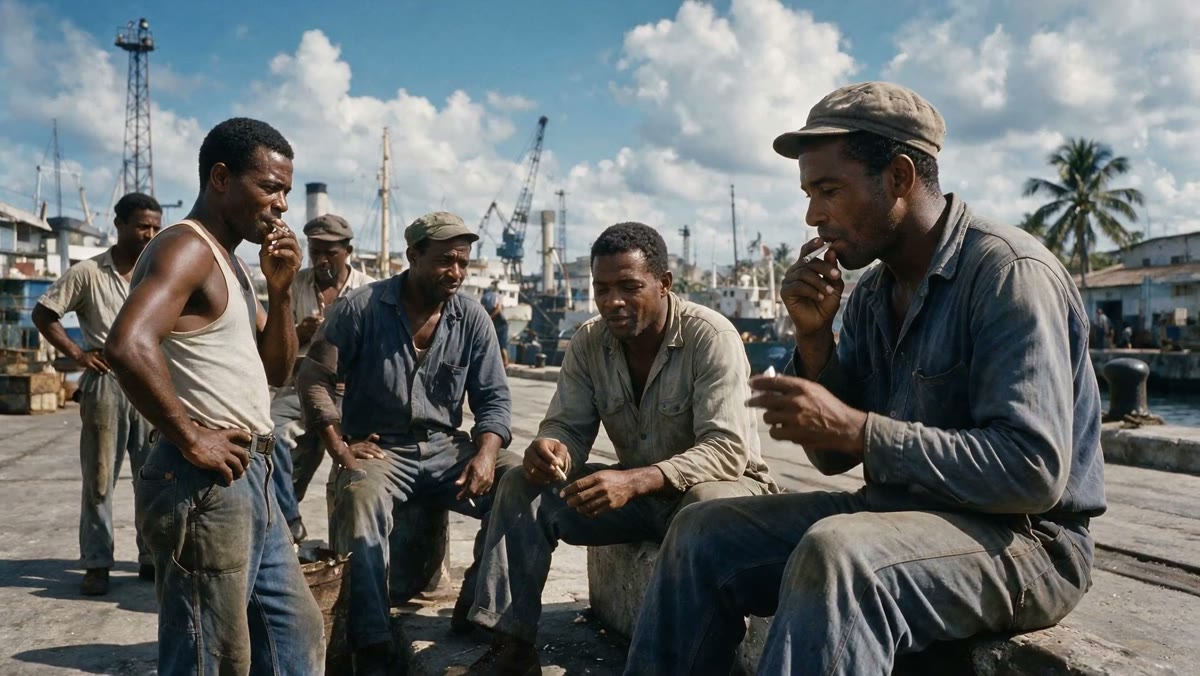
This week's pick comes from TechHalla: a 1960s Havana dock scene taken from a single AI still to full motion with Seedance 2.0. He generates a documentary-style photograph first, then animates it. Tap the image to watch the clip and read the full thread on X.

1960s Havana dock workers, generated as a still then animated with Seedance 2.0 by TechHalla
Clip and prompt by TechHalla on X. Tap the image to watch.

The prompt (generate the still, then animate it in Seedance 2.0):
DIRECTIVE:
Generate a single hyper-realistic documentary photograph. The main subject is a group of Cuban dock workers resting and talking near Muelle de Luz in Havana during the 1960s. Natural and unposed. Shot on 35mm film with a Leica M3. No text or overlays.

SCENE:
Several Cuban men sitting and standing near the port area at Muelle de Luz. Ships and industrial elements visible in the background. Working-class atmosphere.

PEOPLE:
A group of Cuban men (mostly Black and mulato) in their 30s and 40s, wearing work clothes. They are resting, smoking and talking casually after work.

COMPOSITION:
Medium shot from a low angle, giving presence to the workers. The port elements are softly out of focus in the background. Direct but respectful framing.

TECHNICAL SPECIFICATIONS:
Camera: Leica M3, 35mm film
Film stock: Kodak Ektachrome
Style: Humanistic documentary photography with strong natural light and authentic Cuban working life
Lighting: Bright harsh sunlight typical of the port area
Quality: Natural skin textures and realistic work clothing
Prohibitions: No text, no logos, no overlays.